
Foam Gaskets Manufactured to Your Specification
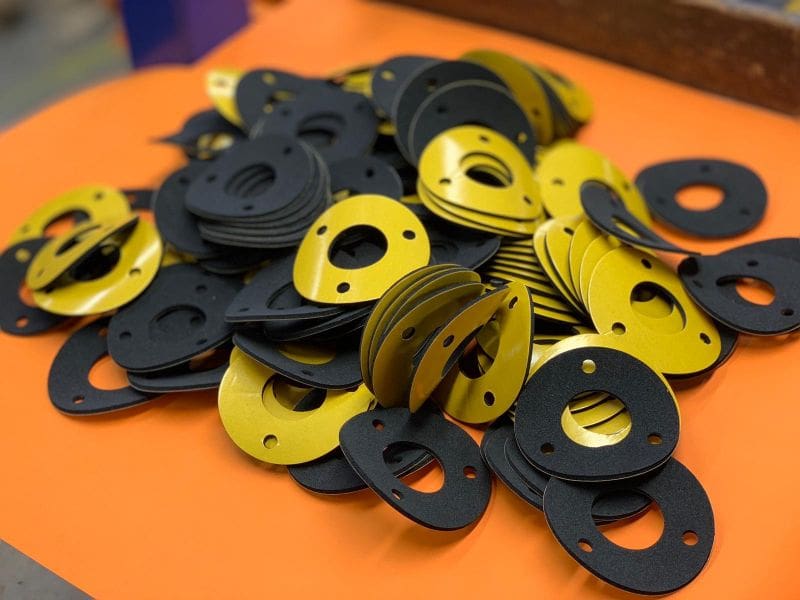
Foam gaskets are compressible sealing components designed to provide protection against dust, moisture, air leakage, vibration and noise. Manufactured from specialist foam materials, they create an effective seal between surfaces while accommodating irregularities and movement. Stephens Gaskets manufactures custom foam gaskets for OEMs, engineers, enclosure manufacturers and industrial businesses across the UK. With over 70 years of experience, we supply precision-cut foam gaskets in a wide range of materials including neoprene foam, EPDM foam, silicone foam and polyurethane foam, tailored to your application requirements.
Foam Gaskets Manufacturing Experts & Bespoke Foam Gaskets Specialists
Call 0121 544 5808 Today
Bespoke Manufacturing
Instant Quote Service
Worldwide Delivery
Various Gauges/Thicknesses
Bespoke Manufacturing
Instant Quote Service
Worldwide Delivery
Various Gauges/Thicknesses
What Are Foam Gaskets?
Foam gaskets are sealing products manufactured from flexible cellular materials that compress under load to create a reliable seal. Unlike solid rubber gaskets, foam gaskets offer greater compressibility, making them ideal for applications where surfaces may be uneven or where vibration and movement occur.
Foam gaskets are commonly used to:
- Prevent dust ingress
- Seal against moisture
- Reduce vibration
- Dampen noise
- Improve thermal insulation
- Create air-tight seals
- Protect sensitive components
They are widely used throughout industrial manufacturing, automotive, HVAC, electrical and electronic sectors.
Custom Foam Gasket Manufacturing
Stephens Gaskets manufactures bespoke foam gaskets from customer drawings, CAD files, specifications and samples.
Our foam gasket manufacturing services support:
- Prototype development
- Low-volume production
- OEM manufacturing
- Replacement components
- Custom sealing solutions
Whether you require simple strips, complex profiles or intricate gasket geometries, our manufacturing capabilities ensure precise and repeatable results.
Foam Gasket Material Comparison
Selecting the correct foam material is critical to achieving long-term sealing performance.
|
Foam Type |
Structure |
Temperature Range |
Typical Applications |
|
Open-Cell Foam |
Air flows through cells |
-20°C to +80°C |
Sound absorption, cushioning, filtration |
|
Closed-Cell Foam |
Sealed cells resist moisture |
-40°C to +120°C |
Weather sealing, HVAC, enclosures |
|
Neoprene Foam |
Closed-cell elastomer foam |
-40°C to +120°C |
Automotive, marine, industrial sealing |
|
EPDM Foam |
Closed-cell weather-resistant foam |
-40°C to +130°C |
Outdoor equipment, water systems |
|
Silicone Foam |
Flexible high-temperature foam |
-60°C to +230°C |
Electronics, aerospace, high-temperature applications |
|
Polyurethane Foam |
Lightweight open-cell foam |
-20°C to +90°C |
Packaging, cushioning, vibration damping |
Open-Cell Foam Gaskets
Open-cell foam contains interconnected air pockets that allow airflow throughout the material.
Benefits include:
- Excellent sound absorption
- Lightweight construction
- Good cushioning performance
- Cost-effective solution
Open-cell foam gaskets are often used where acoustic performance and vibration control are priorities rather than water resistance.
Typical applications include:
- Electronic equipment
- Acoustic enclosures
- Air filtration systems
- Industrial machinery
Closed-Cell Foam Gaskets
Closed-cell foam contains sealed cells that prevent the absorption of water and air.
Advantages include:
- Excellent weather resistance
- Strong sealing performance
- Moisture resistance
- Long service life
Closed-cell foam gaskets are commonly specified for external environments and demanding sealing applications.
Typical uses include:
- Electrical enclosures
- HVAC systems
- Outdoor equipment
- Automotive components
Neoprene Foam Gaskets
Neoprene foam is one of the most widely used foam gasket materials.
It offers:
- Water resistance
- Oil resistance
- Flexibility
- Durability
- Good compression recovery
Neoprene foam gaskets are frequently used within automotive, marine and industrial engineering applications.
EPDM Foam Gaskets
EPDM foam provides excellent resistance to weathering and environmental exposure.
Benefits include:
- UV resistance
- Ozone resistance
- Water resistance
- Long outdoor service life
EPDM foam gaskets are widely used for:
- External enclosures
- Building services
- HVAC systems
- Renewable energy equipment
- Water treatment installations
Silicone Foam Gaskets
Silicone foam is chosen where temperature performance is critical.
Advantages include:
- High-temperature resistance
- Low-temperature flexibility
- UV stability
- Excellent ageing characteristics
Silicone foam gaskets are commonly used in:
- Aerospace applications
- Electrical equipment
- Medical devices
- High-temperature industrial systems
Polyurethane Foam Gaskets
Polyurethane foam offers excellent cushioning and vibration absorption.
Benefits include:
- Lightweight construction
- Good energy absorption
- Cost-effective performance
- Versatile applications
Polyurethane foam gaskets are often used where protection, cushioning and vibration damping are required.
Foam Gaskets for Sealing Applications
Foam gaskets are frequently selected where traditional rubber gaskets may not provide sufficient compressibility.
Common sealing applications include:
- Electrical cabinets
- Outdoor enclosures
- HVAC equipment
- Lighting systems
- Control panels
- Access covers
The compressible nature of foam allows the gasket to accommodate manufacturing tolerances and uneven surfaces.
Foam Gaskets for Vibration and Noise Reduction
Many engineering applications require more than simply a seal.
Foam gaskets can also:
- Absorb vibration
- Reduce mechanical noise
- Protect sensitive components
- Improve equipment performance
This makes them ideal for machinery, electronic assemblies and transportation systems.
Foam Gaskets for Electrical Enclosures
Electrical and electronic equipment often requires protection from dust, moisture and environmental contamination.
Foam gaskets help achieve:
- IP-rated enclosure performance
- Dust protection
- Moisture resistance
- Long-term sealing reliability
They are commonly used within:
- Control panels
- Switchgear
- Battery systems
- Electrical cabinets
- Telecommunications equipment
Foam Gaskets for HVAC Systems
HVAC systems rely on effective sealing to maximise efficiency.
Foam gaskets help:
- Prevent air leakage
- Improve energy efficiency
- Reduce vibration
- Minimise noise transmission
Applications include:
- Air handling units
- Ducting systems
- Ventilation equipment
- Climate control systems
Foam Gaskets for Automotive Applications
Foam gaskets are widely used throughout vehicle manufacturing.
Typical applications include:
- Interior trim
- Lighting assemblies
- HVAC systems
- Door sealing
- Battery enclosures
- Electronic housings
Their flexibility and vibration-damping properties make them highly effective in automotive environments.
Precision Foam Gasket Manufacturing
Stephens Gaskets uses advanced manufacturing processes to produce accurate and repeatable foam gaskets.
Our capabilities include:
- Laser cutting
- CNC knife cutting
- Die cutting
- CAD conversion
- Reverse engineering
- Prototype manufacture
- Batch production
This allows us to support projects ranging from one-off prototypes to large-scale OEM requirements.
Why Choose Stephens Gaskets?
Stephens Gaskets has over 70 years of experience supplying custom sealing solutions to UK industry.
Customers choose us because we offer:
- UK manufacturing
- Bespoke foam gasket production
- Extensive material expertise
- Fast quotations
- Prototype and production support
- Precision manufacturing
- Consistent quality standards
Whether you require a simple sealing strip or a complex foam gasket assembly, our team can help.
Related Foam Products
You may also be interested in:
- Round Foam Gaskets
- Open Cell and Closed Cell Foam Gaskets
- Foam Pads
- Foam Washers and Foam Gaskets
- Rubber Gaskets
- EPDM Gaskets
- Neoprene Gaskets
- Silicone Gaskets
- Custom Gasket Manufacturing

Worldwide Delivery

Fast turn around

High quality components

Technical support
Frequently Asked Questions
What are foam gaskets used for?
Foam gaskets are used to create seals against dust, moisture, air leakage, vibration and noise. They are commonly found in electrical enclosures, HVAC systems, vehicles and industrial equipment.
What is the difference between open-cell and closed-cell foam?
Open-cell foam allows air to pass through the material and is often used for sound absorption. Closed-cell foam contains sealed cells, providing better moisture resistance and sealing performance.
Are foam gaskets waterproof?
Many closed-cell foam materials offer excellent water resistance. Materials such as EPDM foam and neoprene foam are commonly selected for outdoor and moisture-prone environments.
Which foam material is best for outdoor applications?
EPDM foam is often the preferred choice for outdoor applications because it offers excellent resistance to UV exposure, weathering, ozone and moisture.
Can foam gaskets reduce vibration?
Yes. Foam gaskets are frequently used to absorb vibration and reduce noise transmission in machinery, vehicles and electronic equipment.
Can Stephens Gaskets manufacture custom foam gaskets?
Yes. Stephens Gaskets manufactures bespoke foam gaskets from drawings, CAD files, samples and customer specifications.
Do you manufacture foam gaskets in the UK?
Yes. Stephens Gaskets manufactures custom foam gaskets in the UK for customers across engineering, manufacturing and industrial sectors.
Request a Foam Gasket Quote
Whether you need a prototype, replacement gasket or ongoing production supply, Stephens Gaskets can help.
Speak to our team today to discuss your foam gasket requirements.
Prefer to talk it through?
Call: 0121 544 5808
Email: sales@stephensgaskets.co.uk
Website: https://www.stephensgaskets.co.uk/