
Neoprene Gaskets Manufactured to Your Specification
Neoprene gaskets are flexible sealing components made from chloroprene rubber, also known as CR. They are widely used where a balance of weather resistance, durability, compression and moderate oil resistance is required. Stephens Gaskets manufactures custom neoprene gaskets for OEMs, engineers, enclosure manufacturers and industrial customers across the UK. With over 70 years of gasket manufacturing experience, we produce bespoke neoprene gaskets from drawings, CAD files, samples and specifications, supporting applications across automotive, marine, HVAC, electrical, construction and general engineering sectors.
Neoprene Gaskets Manufacturing Experts & Bespoke Neoprene Gaskets Specialists
Call 0121 544 5808 Today
Bespoke Manufacturing
Instant Quote Service
Worldwide Delivery
Various Gauges/Thicknesses
Bespoke Manufacturing
Instant Quote Service
Worldwide Delivery
Various Gauges/Thicknesses
Custom Neoprene Gasket Manufacturing
Neoprene is a versatile gasket material because it performs well across a broad range of everyday industrial environments.
Stephens Gaskets manufactures neoprene gaskets for:
- Electrical enclosures
- HVAC equipment
- Industrial machinery
- Automotive components
- Marine applications
- Construction equipment
- Control panels
- Pumps and compressors
- Outdoor equipment
Whether you need one-off prototypes, replacement gaskets or repeat production runs, our team can manufacture neoprene gaskets to your required profile, thickness and specification.

What Is a Neoprene Gasket?
A neoprene gasket is a sealing component manufactured from neoprene rubber. It compresses between two surfaces to help prevent the ingress or escape of air, water, dust, vibration and contaminants.
Neoprene is commonly selected because it offers a strong balance of:
- Flexibility
- Weather resistance
- Durability
- Compression recovery
- Moderate oil resistance
- Ageing resistance
- General-purpose sealing performance
This makes neoprene useful when one material needs to perform across several operating conditions.
.
Why Choose Neoprene for Gaskets?
Neoprene is not always the most specialist rubber material, but it is often one of the most practical.
It is commonly chosen because it performs reliably in mixed environments where the gasket may face moisture, weathering, movement, compression and moderate exposure to oils or greases.
Typical benefits include:
- Good resistance to weathering
- Good resistance to ozone
- Moderate resistance to oils and fuels
- Strong physical durability
- Good flame resistance compared with some rubber types
- Suitable for indoor and outdoor applications
For many engineering and industrial requirements, neoprene provides the right balance between performance, availability and cost.
Neoprene Gasket Applications
Electrical Enclosures
Neoprene gaskets are commonly used to help protect electrical cabinets, panels and outdoor enclosures from dust and moisture.
Applications include:
- Control panels
- Switchgear
- Telecommunications cabinets
- Battery housings
- Outdoor electrical boxes
HVAC Systems
HVAC systems use neoprene gaskets to support air sealing, vibration control and long-term equipment performance.
Typical uses include:
- Air handling units
- Ducting
- Ventilation systems
- Fan housings
- Access panels
Automotive Applications
Neoprene gaskets are used in automotive environments where flexibility, durability and moderate oil resistance are needed.
Common applications include:
- Lighting assemblies
- HVAC units
- Vibration isolation
- Interior and exterior sealing
- Component protection
Marine and Outdoor Applications
Because neoprene offers good resistance to weathering and moisture, it is often selected for external environments.
Applications include:
- Marine equipment
- Outdoor housings
- Sealing strips
- Access covers
- Protective panels
Neoprene vs EPDM Gaskets
Neoprene and EPDM are both widely used elastomer gasket materials, but they are not the same. The best choice depends on the operating environment.
| Feature | Neoprene Gaskets | EPDM Gaskets |
| Material Type | Chloroprene rubber (CR) | Ethylene propylene diene monomer |
| Weather Resistance | Good | Excellent |
| Ozone Resistance | Good | Excellent |
| Water Resistance | Good | Excellent |
| Oil Resistance | Moderate | Poor |
| UV Resistance | Good | Excellent |
| Temperature Range | Typically -40°C to +120°C | Typically -40°C to +130°C |
| Best For | General sealing, mixed environments, moderate oil exposure | Outdoor, water, UV and weather-exposed applications |
| Common Uses | HVAC, electrical, automotive, industrial sealing | Construction, water treatment, outdoor equipment, seals |
When to Choose Neoprene
Choose neoprene when the application needs a balanced material that can handle weathering, compression, movement and limited exposure to oils or greases.
When to Choose EPDM
Choose EPDM when the application is primarily exposed to water, UV, ozone or outdoor weathering and does not involve oil or fuel contact.
Neoprene Gasket Hardness Guide
Neoprene gaskets are available in a range of hardness levels, usually measured in Shore A. The correct hardness depends on compression, sealing force and the surface conditions of the application.
|
Hardness |
Description |
Typical Use |
|
40 Shore A |
Soft and highly compressible |
Uneven surfaces, light sealing pressure, delicate assemblies |
|
50 Shore A |
Flexible general-purpose grade |
Enclosures, panels, light industrial sealing |
|
60 Shore A |
Medium hardness |
General industrial gaskets, HVAC, machinery |
|
70 Shore A |
Firmer grade |
Higher compression loads, durable sealing applications |
|
80 Shore A |
Harder and less compressible |
Heavy-duty sealing, wear-resistant applications |
| UV Resistance | Good | Excellent |
| Temperature Range | Typically -40°C to +120°C | Typically -40°C to +130°C |
| Best For | General sealing, mixed environments, moderate oil exposure | Outdoor, water, UV and weather-exposed applications |
| Common Uses | HVAC, electrical, automotive, industrial sealing | Construction, water treatment, outdoor equipment, seals |
A softer neoprene gasket can compress more easily, while a harder gasket provides greater resistance to deformation. The right grade depends on surface condition, bolt load, compression requirement and operating environment.
Solid Neoprene vs Neoprene Foam Gaskets
Neoprene gaskets can be manufactured from solid rubber or neoprene foam.
Solid Neoprene Gaskets
Solid neoprene is used where a stronger, more durable and less compressible seal is required.
Typical uses include:
- Flange gaskets
- Machine seals
- Industrial components
- Equipment housings
Neoprene Foam Gaskets
Neoprene foam offers greater compressibility and is often used where surfaces are uneven or where softer sealing is needed.
Typical uses include:
- Enclosures
- HVAC units
- Weather sealing
- Vibration damping
What We Do Not Supply
Stephens Gaskets manufactures custom neoprene gaskets for trade, OEM, engineering and industrial applications.
We do not provide:
- Consumer DIY repair kits
- On-site fitting services
- Plumbing callout services
- Automotive repair diagnostics
- Generic retail gasket packs only
Our focus is precision gasket manufacturing for businesses that need reliable bespoke sealing components.
Bespoke Neoprene Gaskets Made in the UK
Stephens Gaskets manufactures custom neoprene gaskets to suit individual project requirements.
We can work from:
- CAD files
- Technical drawings
- Existing samples
- Reverse-engineered parts
- Customer specifications
Our manufacturing capabilities include:
- CNC cutting
- Die cutting
- Laser cutting where suitable
- Press cutting
- Prototype production
- Batch manufacturing
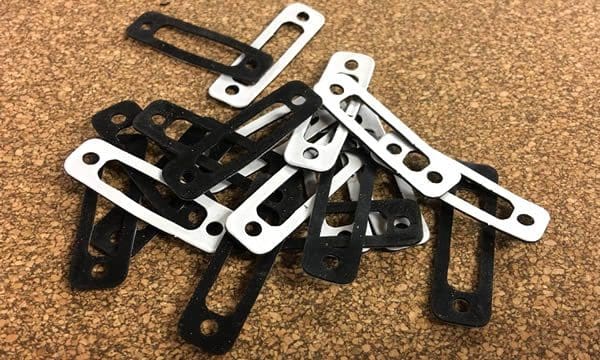
This allows us to supply both simple neoprene gasket profiles and more complex custom components.
Why Choose Stephens Gaskets?
Stephens Gaskets has over 70 years of experience manufacturing custom gaskets, washers, shims and sealing components.
Customers choose us for:
- UK-based manufacturing
- Bespoke neoprene gasket production
- Material selection support
- Prototype and batch capability
- Fast quotation turnaround
- Reverse engineering support
- Consistent quality standards
- Support for OEM and industrial projects
Whether you need a single replacement gasket or ongoing production volumes, our team can help.
Related Products and Services
You may also be interested in:
- EPDM Gaskets
- Rubber Gaskets
- Foam Gaskets
- Gaskets and Seals
- Neoprene Rubber Gaskets
- Gasket Material
- Custom Gaskets
- Laser Cutting Services

Worldwide Delivery

Fast turn around

High quality components

Technical support
FAQs
What is a neoprene gasket?
A neoprene gasket is a sealing component made from chloroprene rubber. It is used to help prevent leakage, protect against dust and moisture and provide flexible sealing between surfaces.
What are neoprene gaskets used for?
Neoprene gaskets are used in electrical enclosures, HVAC systems, automotive components, marine equipment, machinery, control panels and general industrial sealing applications.
Is neoprene better than EPDM?
Neoprene is better where moderate oil resistance is needed. EPDM is usually better for outdoor weathering, UV exposure, ozone resistance and water-based applications.
What hardness is best for a neoprene gasket?
The best hardness depends on the application. Softer grades around 40 to 50 Shore A are more compressible, while firmer grades around 70 to 80 Shore A provide greater resistance to deformation.
Are neoprene gaskets waterproof?
Neoprene gaskets offer good water resistance and are suitable for many moisture-exposed applications. For long-term outdoor water and weather exposure, EPDM may sometimes be the better choice.
Can Stephens Gaskets manufacture custom neoprene gaskets?
Yes. Stephens Gaskets manufactures bespoke neoprene gaskets from drawings, CAD files, samples and customer specifications.
Can neoprene gaskets be used outdoors?
Yes. Neoprene gaskets can be used outdoors because they offer good resistance to weathering and ozone. For maximum UV and weather resistance, EPDM may be considered as an alternative.
Do Stephens Gaskets manufacture neoprene gaskets in the UK?
Yes. Stephens Gaskets manufactures custom neoprene gaskets in the UK for engineering, industrial, OEM and manufacturing customers.
Request a Neoprene Gasket Quote
Need a custom neoprene gasket for sealing, cushioning, weather resistance or enclosure protection?
Speak to Stephens Gaskets about your material, drawing, sample or production requirements.
Prefer to talk it through?
Call: 0121 544 5808
Email: sales@stephensgaskets.co.uk
Website: https://www.stephensgaskets.co.uk/