
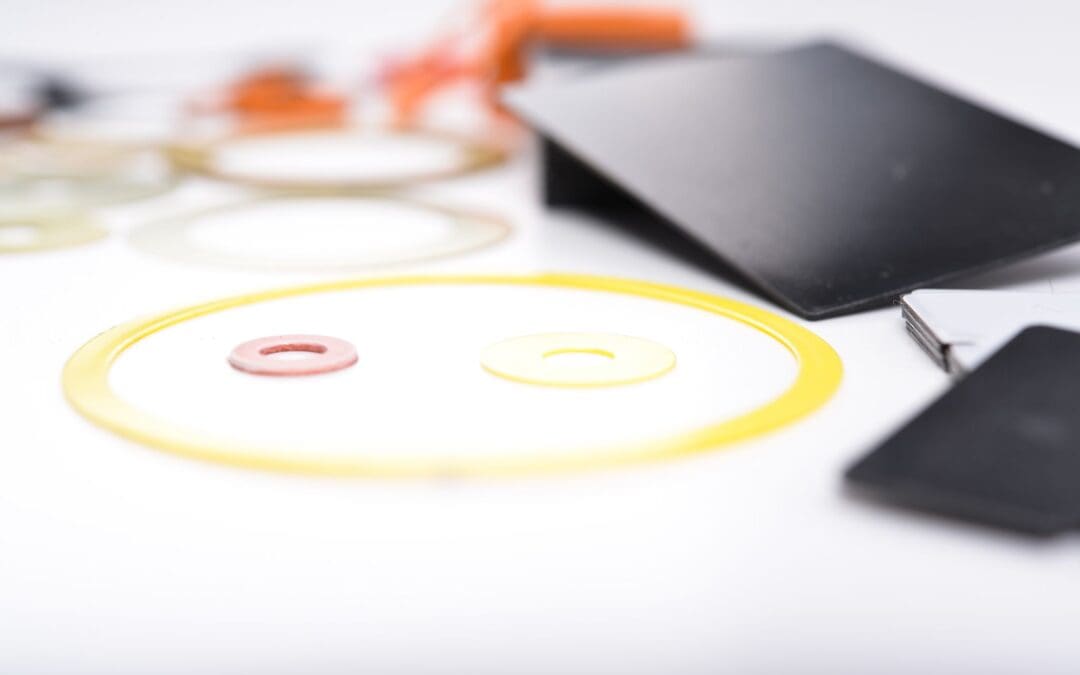
Understanding the difference between ferrous and non-ferrous metals is fundamental when selecting materials for gaskets, shims, washers, and precision-engineered components. Material choice directly affects performance, durability, corrosion resistance, and cost. At Stephens Gaskets, we work with a wide range of ferrous and non-ferrous metals to manufacture components that perform reliably in real industrial environments.
With over 70 years of experience supplying precision components and sheet materials, we help engineers and buyers select the right metal for each application.
What Are Ferrous and Non-Ferrous Metals?
The simplest way to distinguish between ferrous and non-ferrous metals is by their iron content.
- Ferrous metals contain iron and are often magnetic.
- Non-ferrous metals do not contain iron and are typically non-magnetic.
Beyond this basic distinction, each category offers different mechanical, chemical, and environmental properties that influence where the material should be used.
Ferrous Metals Explained
Ferrous metals are widely used in engineering and manufacturing due to their strength and durability. However, some ferrous metals are prone to corrosion if not correctly specified or protected.
Common ferrous metals include:
1. Stainless Steel
Stainless steel is one of the most versatile ferrous metals. It offers excellent corrosion resistance, good strength, and long service life, making it suitable for harsh and demanding environments.
2. Carbon Steel
Carbon steel is known for its hardness and strength. It is commonly used where wear resistance and structural integrity are critical, such as tooling and load-bearing components.
3. Cast Iron
Cast iron provides high compressive strength but is more brittle than other steels. It is often used for engine blocks and heavy-duty applications.
4. Wrought Iron
Wrought iron contains very low carbon content, giving it good resistance to corrosion and oxidation. It is commonly used in decorative and structural applications.
Non-Ferrous Metals Explained
Non-ferrous metals are valued for their corrosion resistance, electrical conductivity, and malleability. Because they do not rust, they are often specified for wet, chemical, or electrically sensitive environments.
Common non-ferrous metals include:
1. Aluminium
Aluminium is lightweight, corrosion-resistant, and easy to form. It is widely used in applications where weight reduction is important.
2. Copper
Copper offers excellent electrical and thermal conductivity. It is commonly used in electrical systems, plumbing, and heat transfer applications.
3. Brass
Brass is an alloy of copper and zinc. It combines good corrosion resistance with excellent machinability and electrical conductivity.
Choosing Between Ferrous and Non-Ferrous Metals
The correct choice depends on the application and operating conditions. Key factors to consider include:
- Exposure to moisture or corrosive environments.
- Required strength and load-bearing capability.
- Electrical or thermal conductivity requirements.
- Weight constraints.
- Cost and availability.
At Stephens Gaskets, material selection is always driven by performance requirements rather than material type alone.
Ferrous and Non-Ferrous Metals in Gaskets, Shims, and Washers
Both ferrous and non-ferrous metals play an important role in the manufacture of precision components.
1. Ferrous metals are often chosen for:
- High-strength shims and washers.
- Load-bearing components.
- Applications requiring dimensional stability.
2. Non-ferrous metals are commonly specified for:
- Corrosion-resistant shims and washers.
- Electrical isolation or conductivity.
- Lightweight assemblies.
Selecting the correct metal ensures long-term reliability and reduces maintenance and replacement costs.
Why Choose Stephens Gaskets for Metal Components and Materials?
Stephens Gaskets combines material expertise with precision manufacturing capability.
Working with us gives you:
- Access to a wide range of ferrous and non-ferrous metals.
- Technical support for material selection.
- Precision manufacturing of shims, washers, and gaskets.
- ISO 9001-certified quality systems.
- Reliable UK-based supply.
We support customers across engineering, manufacturing, automotive, electrical, and industrial sectors.
FAQs
1. What is the main difference between ferrous and non-ferrous metals?
Ferrous metals contain iron and are often magnetic, while non-ferrous metals do not contain iron and typically offer greater corrosion resistance.
2. Which metals are best for corrosion-resistant applications?
Non-ferrous metals such as aluminium, copper, and brass, as well as stainless steel, are commonly used where corrosion resistance is required.
3. Are non-ferrous metals stronger than ferrous metals?
Not necessarily. Ferrous metals such as carbon steel often provide greater strength, while non-ferrous metals offer advantages such as corrosion resistance and conductivity.
4. Does Stephens Gaskets supply components made from both ferrous and non-ferrous metals?
Yes. We manufacture and supply gaskets, shims, and washers using a wide range of ferrous and non-ferrous metals to suit different applications.
5. How do I choose the right metal for my application?
Choosing the right metal depends on factors such as environment, load, corrosion risk, and performance requirements. Stephens Gaskets can provide expert guidance on material selection.
Speak to a Materials Specialist
If you need advice on selecting ferrous or non-ferrous metals for your application, speak directly with Stephens Gaskets.
Our specialists will help you choose the right material and manufacture components that deliver reliable performance.
Contact Our Team
Phone: +44 (0)121 544 5808
Email: sales@stephensgaskets.co.uk to discuss your requirements.
Visit Our Website
Address: Stephens Gaskets Ltd, 19 Hainge Road, Tividale, Oldbury, West Midlands B69 2NR.